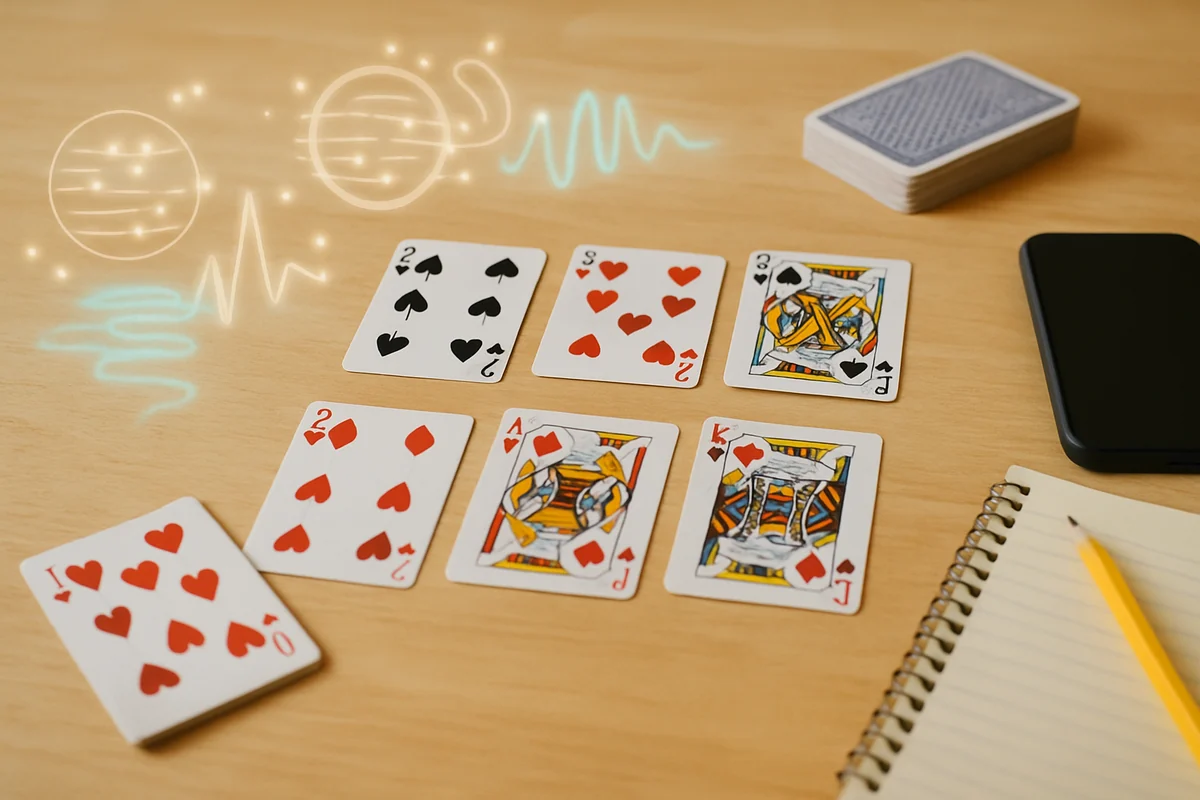
To better memorize in Rummy, don't try to remember everything: focus on the cards that complete your plans and on the visible choices of other players.
In brief: remember less, but remember what matters
In a game of Rummy, it is essential to develop an effective game memory without trying to remember every card played. The goal is to focus on the information that influences your decisions and can help you complete your plans. By adopting a selective approach, you can improve your performance while making the game more enjoyable.
To do this, start by identifying the important cards, those that are visible on the table and that can affect your strategy. By integrating this method into your game, you will learn to memorize the essential elements while avoiding cognitive overload.
Start with the cards related to your own hand
The first step to effectively memorize in Rummy is to focus on the cards that complete your own hand. This means paying attention to the cards you already have and those that could potentially help you form groups or sequences. By concentrating on these cards, you can quickly assess which cards from the discard pile or opponents' hands are most relevant to your strategy.
For example, if you already have two cards of the same color, memorizing the cards of that color played by other players can give you a strategic advantage. You will be able to determine whether you should continue with your project or change your strategy based on the cards you see.
Track visible picks in the discard pile
Another useful technique is to track the cards that are picked and discarded by other players. This allows you to keep track of the cards that are still in play and those that have already been played. By closely observing these picks, you can better anticipate your opponents' moves and adjust your strategy accordingly.
To make this task easier, you can create a simple table to note the visible cards in the discard pile. This can be an effective method to quickly visualize the available options and reinforce your memory without feeling overwhelmed.
| Information | Usefulness | Exercise |
|---|---|---|
| Your hand cards | Identify the cards to complete | Note the cards you have and those you are looking for |
| Discarded cards | Track opponents' choices | Create a table of discarded cards |
| Cards played by others | Anticipate opponents' moves | Try to memorize the last three cards played |
Group information instead of memorizing everything
Instead of trying to memorize every card played, it may be more effective to group information by categories. For example, you can focus on cards that form sequences or groups. By grouping cards in this way, you reduce the amount of information to remember and facilitate decision-making.
One method to achieve this is to visualize the cards in terms of "projects" you want to accomplish. This allows you to focus on the cards that will help you reach your goals rather than getting lost in the details of each card played.
Practice with progressive goals
To improve your game memory, it is advisable to set progressive goals. Start with simple exercises, such as memorizing the cards in your hand and the discarded cards. Once you feel comfortable with this, you can move on to more complex exercises, such as tracking the cards played by other players.
An example of an exercise could be to play a game focusing only on the cards in your hand and noting the cards that are discarded. As you gain confidence, add additional elements, such as memorizing the visible cards of other players. This will allow you to gradually develop your skills without feeling overwhelmed.
Use your memory without slowing down the game
It is important to find a balance between using your memory and the pace of the game. Focusing too much on memorization can slow down the game and detract from the overall experience. To avoid this, try to integrate your memorization techniques smoothly into your game.
For example, instead of stopping to think about each card played, try to make quick associations between the cards you see and those you already have. This can help keep the game dynamic while remaining attentive to important information.
Common mistakes
Here are some common mistakes to avoid when memorizing cards in Rummy:
- Trying to remember everything: This can lead to cognitive overload. Focus on the cards that influence your game.
- Not tracking discards: Ignoring discarded cards can deprive you of crucial information. Take the time to observe them.
- Not grouping information: Memorizing each card individually is less effective than grouping cards by project.
- Rushing: Taking the time to analyze played cards can improve your strategy. Avoid rushing your decisions.
FAQ
Which cards should you remember in Rummy?
It is recommended to primarily remember the cards that complete your hand and those that are visible in the discard pile. This helps you make strategic decisions.
How to track cards picked in the discard pile?
You can note the discarded cards on a board or mentally. This will allow you to keep track of the choices of other players.
How to exercise your memory during a game?
Start with simple exercises, such as memorizing the cards in your hand and the discards. Gradually increase the difficulty by adding more information to remember.
Should you memorize all played cards?
No, it is better to focus on the cards that influence your game. Memorizing every card can be counterproductive and slow down the game.
To deepen your skills in Rummy, feel free to explore other techniques on our site. You can also try a simple memorization exercise during your next recorded game with RamiPlus by visiting RamiPlus.